


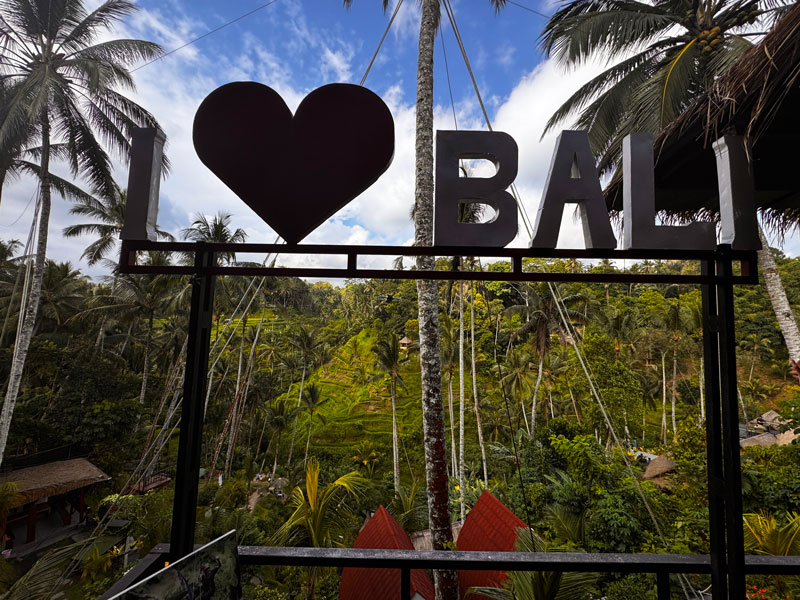
Rice Terraces Around Ubud
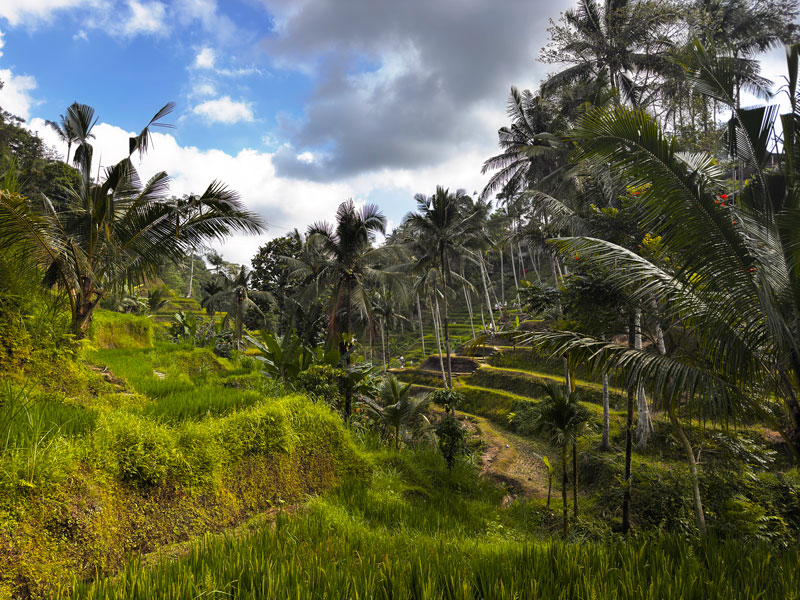
Beyond Bali's beaches and coastal areas, the landscapes around Ubud are known for rice fields, tropical vegetation, river valleys, and traditional villages. Terraced fields can be found throughout the wider Ubud and Gianyar area, with Tegallalang being one of the best-known places to see this type of agricultural landscape.
The appearance of the rice fields changes throughout the growing cycle. Depending on when you visit, the terraces may be bright green, newly planted, approaching harvest, or temporarily less green after harvesting.
View Tegallalang on Google Maps →The Subak Irrigation System
Bali's rice fields are closely connected to subak, a traditional cooperative system for managing irrigation and water distribution. The system connects agriculture with local communities, water temples, and Balinese cultural traditions.
UNESCO inscribed the Cultural Landscape of Bali Province on the World Heritage List in 2012. The protected cultural landscape consists of five specific areas that demonstrate the relationship between the subak system, rice cultivation, water temples, and the Balinese philosophy of Tri Hita Karana.
It is important to distinguish Bali's wider subak tradition from individual tourist attractions. Not every rice terrace around Ubud is part of the UNESCO World Heritage property.
Tegallalang Rice Terrace
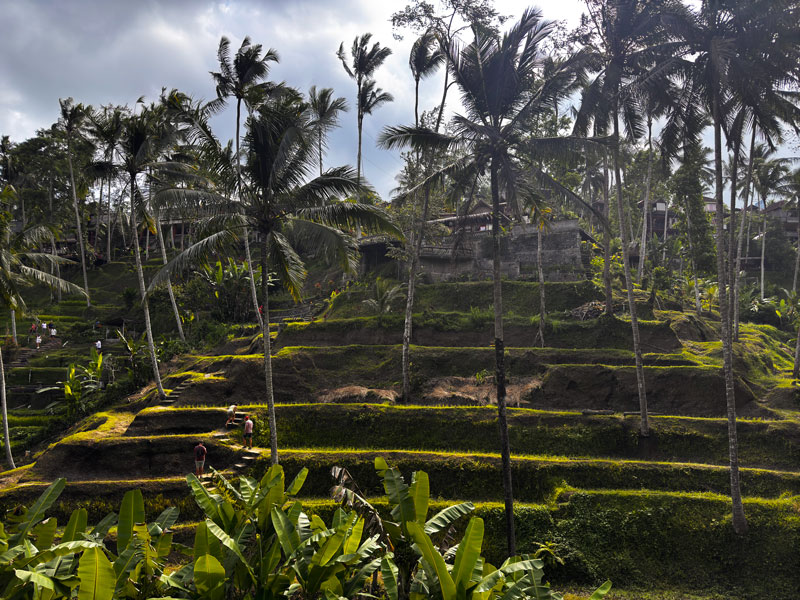
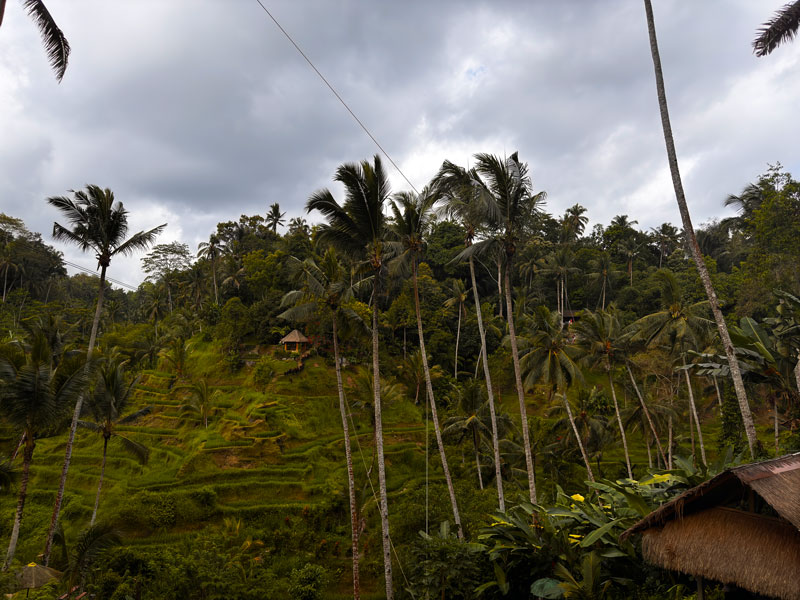
Tegallalang is one of the most recognizable rice terrace areas near Ubud. Located in Gianyar Regency, north of central Ubud, the area is characterized by rice fields arranged along the slopes of a valley.
Visitors can view the terraces from several points along the surrounding roads and explore designated walking areas. The landscape remains part of an agricultural environment, so visitors should respect farmers, private land, signs, and locally managed access points.
Exploring the Countryside Around Ubud
Rice fields are not limited to one tourist attraction. Traveling through the countryside around Ubud and Gianyar reveals agricultural landscapes, small villages, temples, local roads, and working rice fields in many different areas.
Conditions vary throughout the year and according to the agricultural cycle, so the appearance of individual fields can be very different from one visit to another.
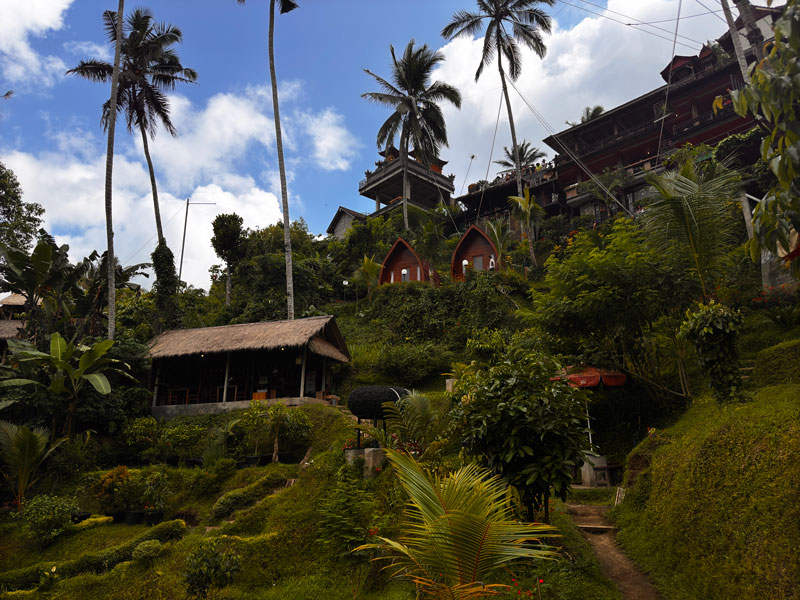
Getting Around Ubud by Scooter
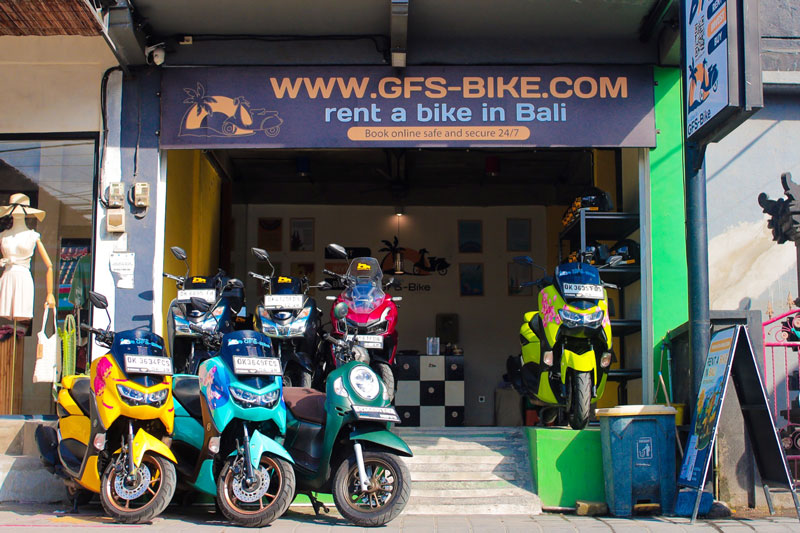
A scooter can be a practical way to travel between Ubud, Tegallalang, nearby villages, rice fields, temples, and other destinations in central Bali. Roads outside central Ubud can vary considerably in width, surface quality, gradients, and traffic conditions.
Compare available Honda and Yamaha scooters for local trips or longer journeys around Bali. Once you have selected a scooter, you can book online and request delivery to your location, subject to booking confirmation, location, and availability.
Before you ride: Make sure you have a valid driving license for the appropriate vehicle category and meet applicable Indonesian driving requirements. Always wear a helmet, follow Indonesian traffic regulations, and adjust your speed to current road, weather, and traffic conditions.
Best Time to Visit Rice Terraces
Morning and late afternoon can be comfortable times to explore rice terraces, with lower temperatures and softer natural light than around midday. Popular locations such as Tegallalang may also become busier as the day progresses.
Rice terraces are working agricultural landscapes rather than permanent green attractions. Their appearance depends on planting, irrigation, growth, and harvesting cycles, so conditions can vary throughout the year.
Respect the Rice Fields and Local Communities
When visiting rice-growing areas, stay on designated paths where required and respect private property, farmers, temples, irrigation channels, and local community activities. Avoid entering cultivated fields without permission and dispose of waste responsibly.
Exploring the rice fields around Ubud provides an opportunity to see an important part of Bali's agricultural and cultural landscape while traveling beyond the island's coastal destinations.
Explore Bali with GFS-Bike →